
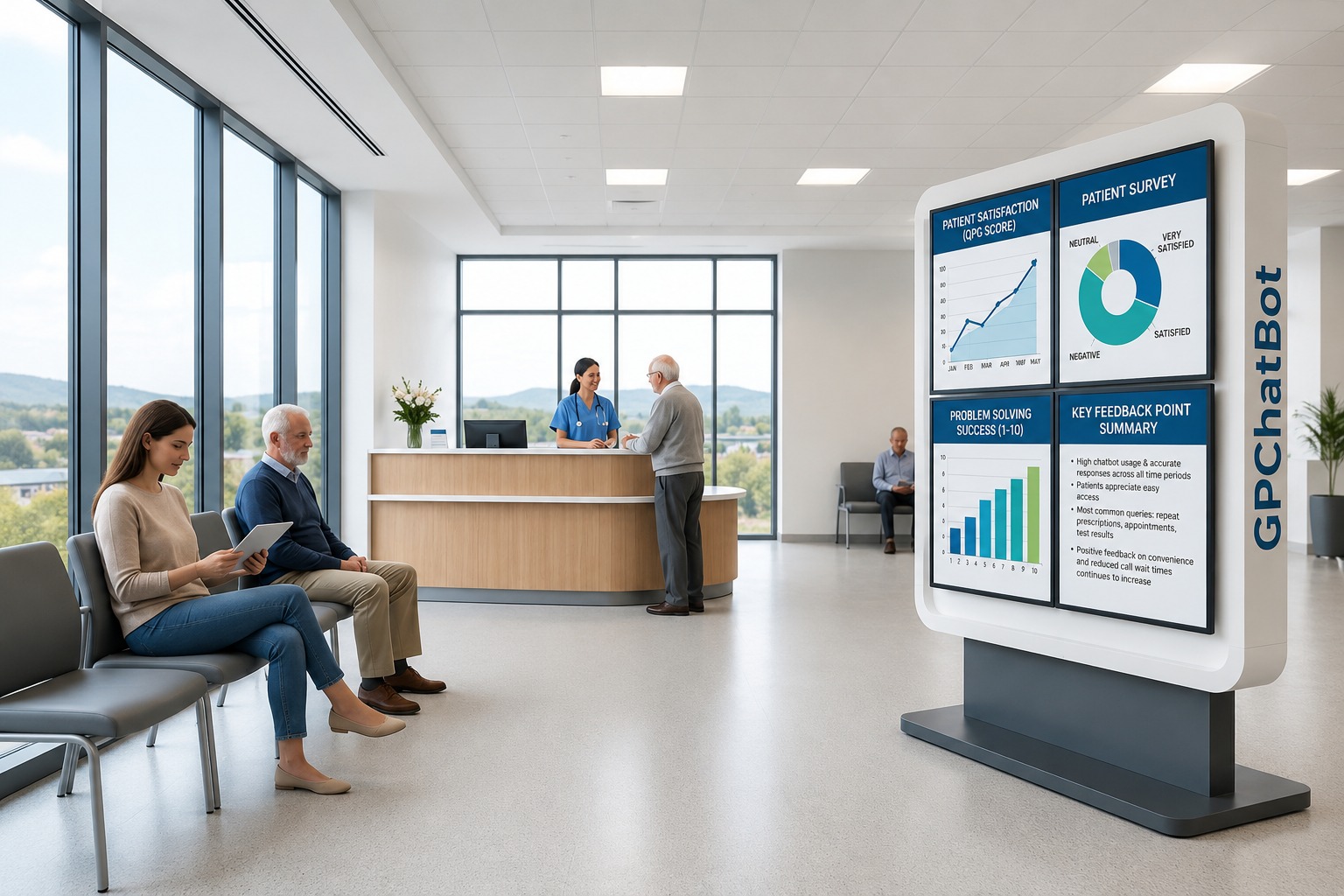
How do your patients actually feel about your digital front door?
According to the latest patient feedback data, a significant portion of primary care dissatisfaction doesn’t stem from clinical care itself, but from contact friction. The administrative hassle of simply trying to navigate a practice’s entry point is what often drives negative reviews.
For many UK GP surgeries, “digitizing the front door” meant installing static online triage forms. However, patient satisfaction surveys and operational reality are proving that simply replacing a telephone queue with a digital text backlog isn’t a sustainable solution.
If your digital front door is frustrating the very people it’s meant to serve, it’s time to look at how modern conversational infrastructure can turn patient feedback into a tool for workforce resilience.
The Inbox Dump Problem: Why Static Web Forms Frustrate Patients
Static web forms are inherently passive. They act as a digital mailbox, requiring patients to type out long, unstructured paragraphs of text to describe their symptoms or administrative requests.
This creates a dual-sided problem:
-
For Patients: They are left staring at a flat, clinical form with no real-time guidance, leaving them uncertain if their request was understood or when they will hear back.
-
For Practice Staff: The administration team is hit with an “inbox dump” wading through paragraphs of unstructured text to manually figure out what the patient needs and where to route them.
When patients feel that an online form is a black hole, they return to the phones, driving up the 8:00 AM telephone queue and increasing pressure on your front-of-house staff.
Transforming Patient Feedback with an Active Digital Receptionist
To truly modernise patient access, GP practices must move from passive data collection to active care navigation. This is where an AI-powered conversational digital receptionist like AiLeen changes the operational dynamic.
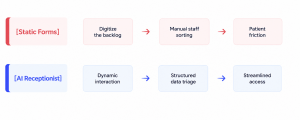
Instead of a flat form, an AI receptionist interacts dynamically with patients via the web or WhatsApp. It guides the conversation in real time, filtering out routine administrative queries and cleanly structuring clinical intake data before it ever reaches your staff’s inbox.
Key Benefits of Conversational Infrastructure:
-
Reduced Phone Demand: By providing an intuitive, conversational interface on WhatsApp and web browsers, more patients willingly adopt the digital pathway, freeing up telephone lines for vulnerable individuals.
-
Structured Triage Data: Practice teams receive clean, categorized data points rather than unstructured essays, shaving minutes off every single patient request.
-
Improved Patient Access: Patients receive immediate interaction and clear guidance, which directly translates to positive patient feedback and better survey scores.
Protecting Practice Capacity and Workforce Resilience
True workforce resilience isn’t about working faster; it’s about reducing the volume of repetitive manual sorting. By letting a conversational digital receptionist handle the initial patient interaction, filter routine requests, and structure incoming clinical data, you protect your frontline reception team from burnout.
When your digital front door is intelligent, intuitive, and truly accessible, your patient feedback will naturally reflect a more efficient, less stressful primary care experience.