
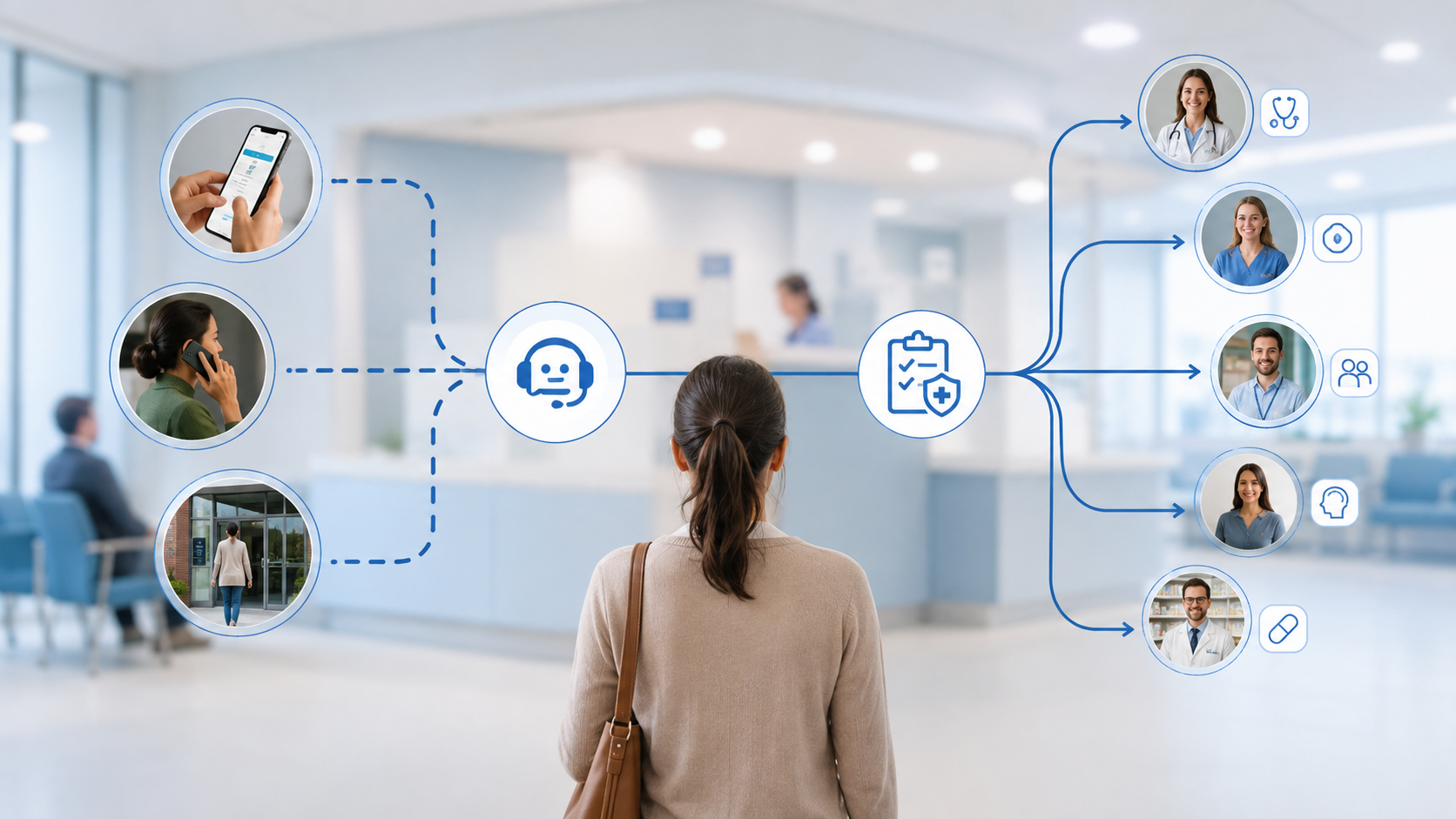
Digital access in primary care has expanded rapidly. Patients can now contact their GP practice through online consultation forms, practice websites, telephone systems, the NHS App and traditional face-to-face routes.
That progress matters. But there is an important distinction practices and Primary Care Networks need to consider:
More ways to access care do not automatically create a simpler patient journey.
In fact, as more digital channels are introduced, effective GP care navigation becomes even more important. The goal should not simply be to create another digital doorway, but to ensure every doorway helps patients reach the right care.
Digital Access in Primary Care Is Growing
Online access is now firmly established within modern general practice.
According to NHS England, 83 million online consultation requests were submitted to GP practices in the 12 months to February 2026. February alone saw a record 8.6 million online submissions, while practices still received 29.2 million telephone calls during the same month.
These figures demonstrate something important: digital access is growing, but patients continue to use different routes to reach primary care.
NHS England’s Modern General Practice model recognises this. Patients should have a choice between three main contact routes: telephone, online and walk-in. However, regardless of how the patient makes contact, NHS England recommends using one consistent care navigation and workflow process to assess their needs and direct them towards the appropriate professional or service.
That is where digital simplicity begins.
More Digital Channels Can Still Create Confusion
Imagine a patient who needs help but isn’t sure where to start.
Should they complete an online consultation? Call reception? Use the NHS App? Look through the practice website? Do they need a GP appointment, a pharmacist, a nurse or another local service?
Providing all these options improves choice. But without clear patient care navigation, more choice can also mean more uncertainty.
A successful digital front door for GP practices should therefore do more than allow patients to make contact. It should make the next step easier to understand.
NHS England similarly describes highly usable and accessible GP websites and online journeys as a critical part of modern general practice, helping patients request the support they need and enabling practices to manage those requests more effectively.
From Digital Access to Digital Navigation
The next stage of digital transformation in primary care is not necessarily about adding more technology.
It is about connecting what already exists.
Whether a request starts online, over the phone or in person, patients should experience a coherent journey that helps establish what they need and guides them towards the most appropriate response.
That might mean:
- directing an appropriate patient towards Pharmacy First
- identifying when a GP or another member of the multidisciplinary team is needed
- helping with administrative requests without taking up clinical capacity
- directing patients towards self-service options where appropriate
- making it clearer what happens after an online request is submitted
NHS England’s care navigation guidance describes this approach as moving away from a simple first-come, first-served model towards assessing patient need and allocating people to the appropriate healthcare professional or service within the appropriate timeframe.
The result can be a simpler experience for patients and more effective use of practice resources.
Digital Simplicity Also Matters for Practice Teams
Poorly connected digital channels do not only affect patients.
If an online system generates requests that still require extensive manual sorting, repeated clarification or unnecessary telephone conversations, the administrative burden may simply move from one channel to another.
A well-designed digital patient journey in general practice should support the team behind the front door too.
There is evidence that combining digital access with effective care navigation can make a meaningful difference. An NHS England case study of Lime Tree Surgery found that introducing online consultations alongside a dedicated care-navigation approach helped prioritise requests and contributed to a 45% reduction in incoming calls to reception staff.
The lesson is not simply to “put patients online.”
It is to design the journey around what patients actually need.
Where Can AI-Supported Care Navigation Help?
This is where tools such as AiLeen from GP Chatbot can support the next step in digital patient access.
Rather than functioning as just another contact channel, AiLeen can sit within the practice’s digital front door and help patients navigate routine enquiries, find relevant information and understand the appropriate next step.
The objective isn’t to replace existing access routes or clinical judgement.
It is to make digital access clearer, more consistent and easier to navigate, while helping reduce repetitive administrative interactions for practice teams.
Because the future of digital primary care shouldn’t simply be about giving patients more doors.
It should be about making it easier to find the right one.