
What if your GP practice could answer a patient’s question before they ever needed to pick up the phone?
For years, much of patient communication in primary care has been reactive.
A patient needs something. They call the practice, submit a request or visit the surgery. Reception responds, directs the patient and helps them find the appropriate next step.
But as demand on general practice continues to grow, there is another opportunity: proactive patient engagement.
Instead of waiting for patients to contact the practice, GP teams can use digital patient communication to reach the right patients, with the right information, at the right time.
From vaccination campaigns and health checks to appointment reminders and important practice updates, proactive communication can help patients take action earlier while potentially preventing avoidable enquiries from reaching reception in the first place.
Why Proactive Patient Engagement Matters in Primary Care
The way patients access general practice is changing rapidly.
According to NHS England, 83 million online consultation requests were submitted over the 12 months to February 2026, while February alone saw 29.2 million telephone calls to GP practices.
That’s more than one million calls every working day.
Digital access is already becoming a core part of modern general practice, but improving access isn’t only about giving patients another way to contact their GP.
It is also about asking:
Can we reduce the need for some of those contacts altogether?
This is where proactive patient communication becomes particularly valuable.
If a practice knows a group of patients needs a vaccination, health check, routine review or important service update, waiting for each individual patient to make contact creates unnecessary friction.
A targeted message can move communication in the opposite direction.
The practice reaches the patient first.
From Reactive Communication to Proactive Patient Communication
Consider a seasonal flu vaccination campaign.
In a traditional model, eligible patients may see general NHS messaging, receive a letter or eventually contact their practice to ask:
- Am I eligible?
- When can I book?
- How do I book?
- Where will the vaccination take place?
- What should I do next?
Multiply those questions across hundreds or thousands of patients and a straightforward campaign can create significant administrative demand.
With proactive patient engagement, the practice can identify the relevant patient group and send clear information directly to them.
The message might explain eligibility, provide the appropriate next step and direct patients towards the correct booking or information route.
One campaign can therefore answer questions for many patients before those questions become individual telephone calls.
Using WhatsApp for GP Practice Patient Engagement
One of the biggest challenges with digital transformation is not simply introducing more technology.
It is encouraging people to actually use it.
That is why familiar communication channels can play an important role.
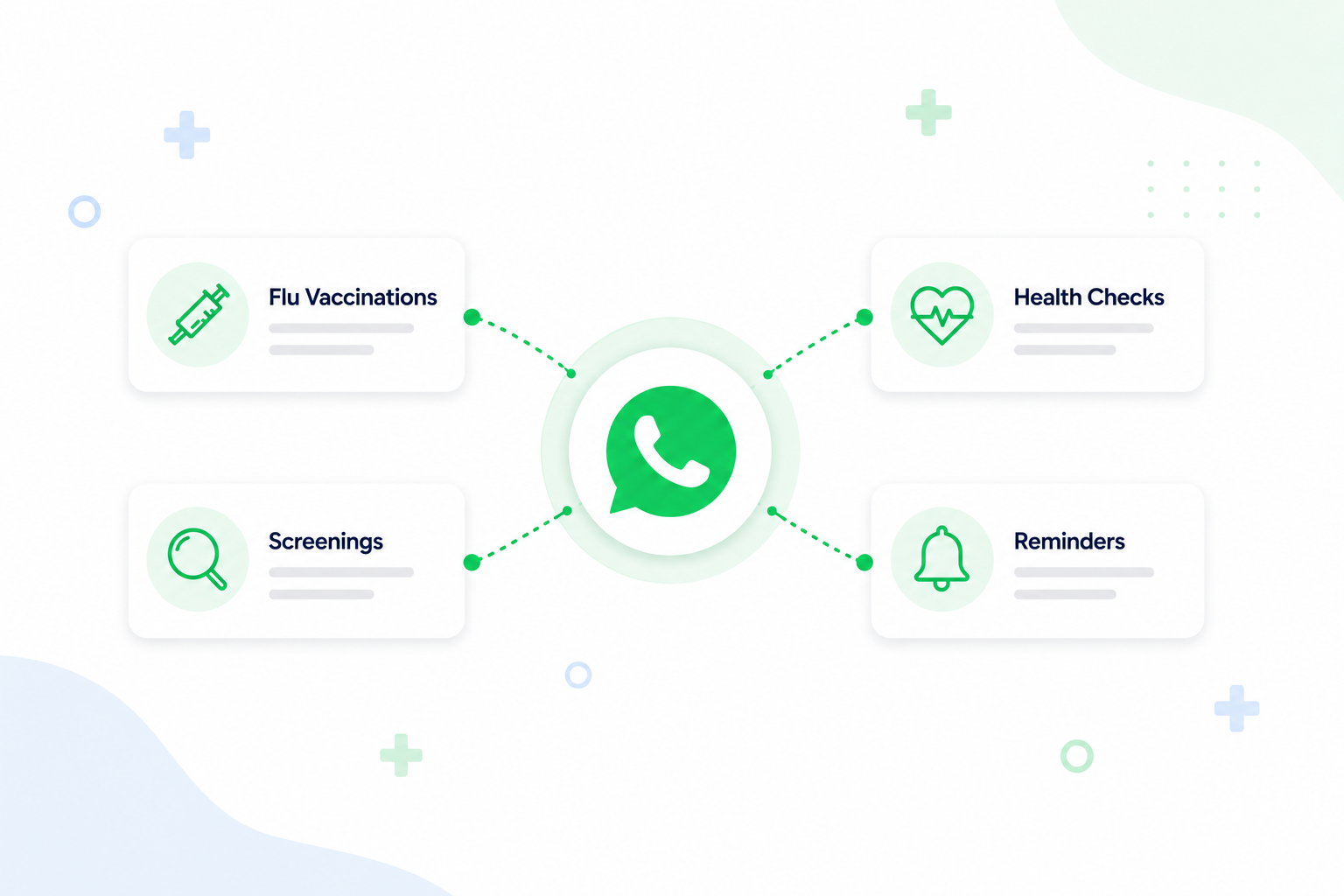
WhatsApp campaigns for GP practices can provide a convenient way to communicate relevant updates directly to patients through a channel many already understand and use in everyday life.
Depending on the practice’s requirements and approved communication workflows, proactive campaigns could support communication around:
- Vaccination programmes
- Routine health checks
- Screening awareness
- Appointment reminders
- Practice updates
- Service changes
- Health campaigns
- Appropriate self-service options
- Relevant local or NHS services
The objective isn’t to send more messages.
It is to send more useful messages at the right moment.
How Proactive Communication Can Reduce Pressure on GP Practices
Administrative pressure rarely comes from one large task.
It often comes from hundreds of small interactions repeated throughout the day.
A patient calls to check whether a clinic is running.
Another asks how to access a service.
Another needs information about an upcoming campaign.
Another wants to know what happens next.
Each enquiry may take only a few minutes, but collectively they consume valuable practice capacity.
Proactive digital patient communication can help address some of these repetitive interactions before they happen.
That can potentially mean:
Fewer avoidable enquiries.
Patients receive relevant information before needing to contact reception.
Better-informed patients.
Clear instructions help patients understand what action they need to take.
More appropriate routes into care.
Patients can be directed towards the right service or next step rather than automatically calling reception.
More time for practice teams.
Reducing repetitive administrative conversations can allow staff to focus their attention where human support is most valuable.
A smoother patient experience.
Patients don’t always have to search for information or wait until they can contact the practice.
Proactive Engagement Should Add Choice, Not Remove It
Digital patient communication works best when it expands access rather than restricting it.
Some patients will prefer telephone contact. Others may use online consultation tools, the NHS App or visit the practice.
Proactive messaging should complement these routes.
NHS England’s modern general practice model emphasises an equitable experience across telephone, online and walk-in access. The goal is not to force every patient into one digital pathway, but to make it easier for people to find the appropriate route for their needs.
The same principle applies to proactive patient engagement.
A useful message doesn’t say, “Don’t call us.”
It helps answer:
“Here’s what you need to know, and here’s what you can do next.”
That distinction matters.
Moving Beyond Appointment Reminders
When practices think about automated patient communication, appointment reminders are often the first use case that comes to mind.
But the potential is much broader.
Imagine identifying patients who are eligible for a particular health campaign and communicating with them directly.
Or informing a specific patient cohort about a new service without relying on them to discover it on the practice website.
Or sending timely guidance before a predictable period of high demand.
This moves GP practice communication from simple notification towards intelligent patient engagement.
The practice isn’t merely responding more efficiently.
It is anticipating common needs.
Where GP Chatbot Fits In
At GP Chatbot, we believe the digital front door shouldn’t begin only when a patient asks for help.
It can begin with the practice reaching out first.
Through proactive WhatsApp Campaigns, practices can communicate directly with relevant groups of patients, helping them understand available services, important updates and the appropriate next steps.
Combined with Aileen, our 24/7 digital receptionist, this creates a more connected patient journey.
A proactive campaign can start the conversation.
Aileen can then be available to help patients navigate information and services when they need further guidance.
The result is a model of patient communication that doesn’t simply wait for demand to arrive.
It helps manage demand before it reaches the front desk.
The Future of Patient Engagement Is Proactive
General practice will always need strong reactive access.
Patients need to know they can contact their practice when something is wrong or when they need support.
But not every interaction needs to begin that way.
Sometimes the practice already knows what information patients are likely to need.
Sometimes it knows which patients need that information.
And sometimes one well-timed message can prevent hundreds of individual questions later.
That’s the opportunity behind proactive patient engagement in primary care.
Don’t just make it easier for patients to contact the practice.
Give them useful information before they need to.
Ready to Make Patient Communication More Proactive?
Discover how GP Chatbot and WhatsApp Campaigns can help your practice engage patients earlier, communicate more effectively and create a smarter digital front door.
Visit gpchatbot.com to learn more.